The parole of sex offenders causes a conflict with the parole board’s guarantees

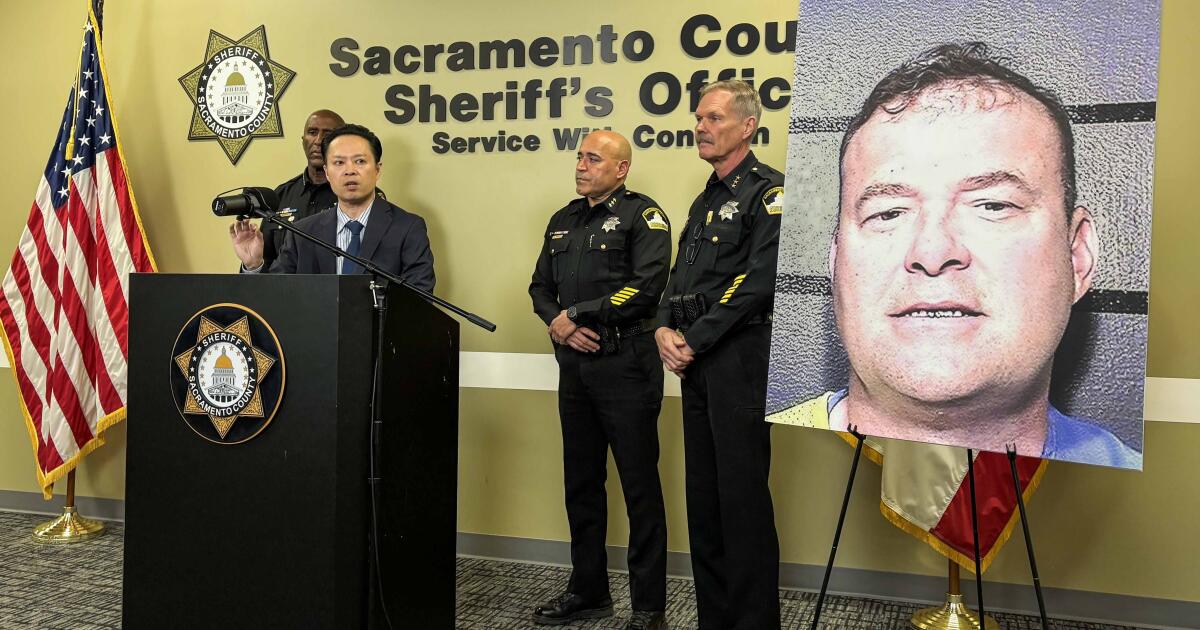
SACRAMENTO – The Democratic-led state Senate has voted to reconfirm five commissioners on the California Board of Parole Hearings, a move that has raised eyebrows from Republicans who say the board has made too many bad decisions recently.
“The current board is not doing a good job of protecting children and should be replaced,” said Sen. Steven Choi (R-Irvine), speaking June 1 on the Senate floor.
The parole board consists of 21 commissioners who are appointed by the governor and confirmed by the Senate for a three-year term. The five current commissioners – William Muniz, Michael Ruff, Rosalind Sargent-Burns, Mary Thornton and Jack Weiss – were reconfirmed on June 1 by party-line votes.
Senate Republicans have spoken out, expressing anger over the board’s recent decisions to grant amnesty to serial sex offenders David Allen Funston, Gregory Lee Vogelsang and Roberto Antonio Detrinidad. (The vote of each commissioner was not made public.)
Democrats defended the board, saying it followed a landmark 2008 ruling from the California Supreme Court that declared parole denials must be based on evidence that the person is in present danger.
“Parole decisions should be based on current security risks and not on the severity of the original case,” said Sen. Eloise Gómez Reyes (D-Colton). “Evidence-based risk assessment exists for this purpose.”
California’s adult parole program allows inmates age 50 and older to be eligible for a parole eligibility hearing if they have been incarcerated for at least 20 consecutive years. A person can be released if the commissioners determine that they do not pose a risk to public safety.
Republicans, however, questioned the board’s decision.
Sen. Shannon Grove (R-Bakersfield) said the transcript of Funston’s first parole hearing shows he admits he is still attracted to children and said he would throw cold water on his face to curb his urges.
Funston used candy and toys to lure children playing outside in the Sacramento area to his car in 1995 and 1996, prosecutors said. He was convicted of 16 counts of child abduction and child abuse.
“There is not a single person in this room who would like this man to be alone with their children or grandchildren or others who voted for us,” said Grove. “But this board voted to release him from prison.”
Sen. Rosilicie Ochoa Bogh (R-Yucaipa) criticized the board for not releasing certain voting records of individual commissioners. He said he asked the five commissioners to reveal their records, which California allows but does not require.
“They all refused,” said Bogh. “If you’re not willing to own up to how you voted to free a child abuser or a repeat rapist, you’re not going to get my vote.”
After the votes, Senate Minority Leader Brian W. Jones (R-Santee) criticized Democrats in a statement for “rubber-treading” re-election and said the board had lost all credibility with the public.
A board spokesman said the commissioners follow California law and put public safety first.
“The Board’s standard is rigorous, involving multiple steps and the use of validated risk assessment tools, including evaluation by psychologists,” spokeswoman Emily Humpal wrote in an email. “More than 97% of parolees return to their communities without a new conviction within three years.”
Some prosecutors and victims recently expressed anger at the board’s decisions. Another victim, who was abducted by Funston at the age of 4 and sexually assaulted with a knife to her throat, previously told The Times she should remain in prison.
Jones and Sen. Roger Niello (R-Fair Oaks) this year introduced Senate bill 1278, which would bar those convicted of “rape, homosexuality, lewd and lascivious acts, and habitual sex offenders” from the adult parole program. Some offenders have been banned, including those convicted of murdering a law enforcement officer.
The bill eventually died in the Senate Committee on Public Safety in April.
Another bill from Assemblywoman Stephanie Nguyen (D-Elk Grove) would raise the minimum age for parole for sex offenders convicted of rape, sexual intercourse, or aggravated sexual abuse of a child to 65.
If signed into law, the measure would amend former Assemblyman Phil Ting’s (D-San Francisco) legislation, which was signed into law in 2020 and lowered the minimum age requirement for adult parole consideration from 60 to 50.


