
 This is the experience
Amidst the fight for a new Syria, the country’s musicians are looking forward to the leadership of the Islamic rebels and hope to build on the hard-won gains during the nearly 14-year civil war.
The conflict gave strength and focus to the emerging heavy metal scene.
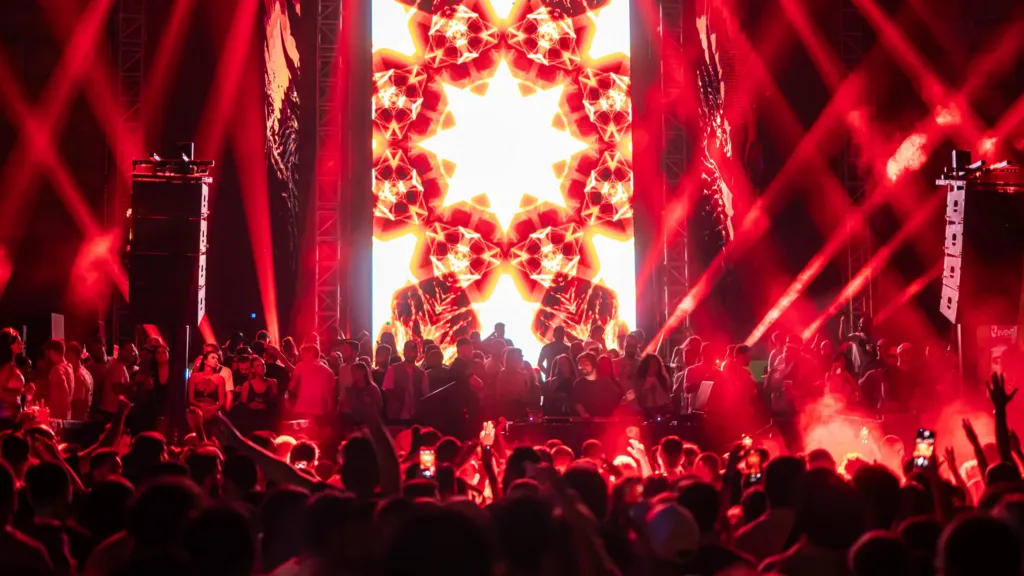
As the war intensified, a thriving electronic music and dance scene industry rose from the ashes, leading to the return of Syria’s nightlife.
Now, its members are preparing to go to a government led by Hayat Tahrir al-Sham, or HTS – a group with roots in al-Qaeda and the Islamic State. HTS has said it broke years ago with its dangerous past.
“We have to plan before we go to them because they are organized,” said DJ and singer Maher Green. “We are willing to talk to them in a reasonable way. We are willing to talk to them with a real proposal.”
Electronic music editors found a way to talk to the security forces working for the former president, Green said.
“They did not understand the gathering of 50 boys and girls and dancing in this bad way,” he said. “We have built a relationship with them over the years so that we can continue in a positive and peaceful way.”


The Assad regime was less tolerant of heavy metal rockers who started underground bands in the late 1990s and early 2000s.
They see it as a heretical Western religion associated with Satanism.
“I went to the intelligence service maybe three times, just because I sold this kind of music,” said Nael al-Hadidi, who owns a music store. “They made me sign some papers that I won’t do it again.”
The focus shifted when the brutal suppression of Syria’s democratic revolution sparked a bloody civil war.
Before the war, even if you grew long hair, wore black t-shirts, metal dance t-shirts, the security forces would take you, they would suspect you were Satan or whatever,” said al-Hadidi.
“After the start of the war, they were too busy to dig this way. They were too afraid of politics.”
This paved the way for the emergence of a strong metal scene, the subject of Monzer Darwish’s documentary called Syrian Metal is War.
The war may have energized metal bands, but it ultimately led to a mass exodus of musicians who felt that the country no longer offered a future.
“Ninety percent of my friends are from Europe, the Netherlands and Germany,” said al-Hadidi, shaking his head.
Wajd Khair is a musician who stayed, but stopped music in 2011 when the killings started.
“It seemed that whatever words I would write, would not express what really happened, no words could describe what was happening at that time,” he told me.

Just last year Khair finally started playing and recording again. Now you wonder what Islamic leadership means about creative freedom.
“We have to be brave,” he said when asked if he would keep the word low until the situation is clear.
“We have to listen. We have to let all the people know that we are here. We are here. It’s not just the Islamic Front and the Islamic State here. I don’t think sitting down under these conditions is good for anyone. .”
Khair was encouraged by the pragmatism shown in the days following the rebel takeover. “The indications are that we will hopefully go to a better place,” he said.
But as he spoke, we heard that HTS had closed the Opera House. “It’s not a good sign” if it’s true, Khair exclaimed.
We rushed to this place and were told by foreign officials that this was a lie, that this prestigious institution will open one week after the victory of the rebels and other public buildings.
HTS certainly promises to respect rights and freedoms. It seems sensitive to the cosmopolitan culture of Damascus. State television began airing Islamic songs last week but pulled it less than 24 hours later when social media erupted with protests.

In the square outside the Opera House, Safana Bakleh was trying to sing revolutionary songs with the choir she directs. Joining the enthusiastic youth, he gave his drum and let them sing and sing.
“Maybe it won’t be an easy way,” he said. “Maybe we will have new obstacles, but we had corruption, we had a dictator, we had secret police. We still have a lot of hope for the future…because we have a very large group of people who are opponents and musicians and actors, musicians and composers and the future of Syria.”
But they don’t want to exchange political dictatorship for religious fundamentalism, al-Hadidi said.
“I hope HTS stands by their words about freedom, because we don’t want to be another Afghanistan or another country ruled by a certain party or rulers who force you to (follow) certain laws.”
Determined to remain a part of Syria’s future, Green said it is important for the arts community to act quickly.
“It doesn’t seem that in the first week of liberating Syria, (HTS) is willing to look at the cultural side. They have many problems, they want the economy, they want to make a new government,” he said.
“We are trying to organize ourselves before they start looking at culture. To get there first, (and we should) be united in our views.”
Like others here, Green has been experimenting, mixing traditional Arabic music with electronic beats.
The culture of Muslim rebels is “religious songs and that’s it,” he said.
“This goes back a little bit for us. We were here in Syria before the war, and inside during the war, (there) we had a lot of research. We evolved a lot. We have a lot of mixed cultures.”
Syria’s music scene was revived and flourished during the civil war – now it is facing a new and unexpected test.
Source link